
 Idera Olaniyi
About the Author
Pede Hollist was born in Sierra Leone. He was given the name Onipede Arthur Hollist at birth. He is a writer and an academic who teaches English at the University of Tampa, Florida, United States. He writes about African identity, migration, cultural traditions, gender, and the experiences of Africans living between their home countries and foreign societies.
Textual Background
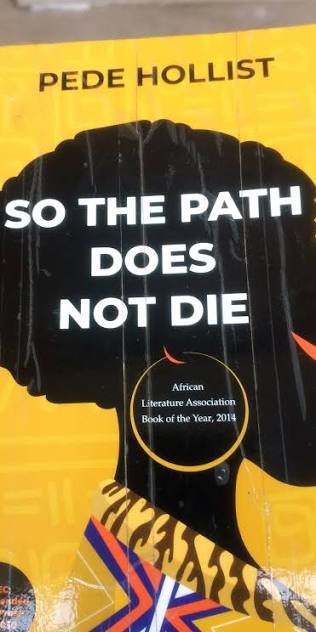
So the Path Does Not Die is a coming-of-age novel, also known as a bildungsroman. This is a type of novel that follows a character’s development from childhood into adulthood.
The story follows Finaba Marah, popularly called Fina, as she struggles with questions of identity, culture, belonging, and survival. Her journey takes her from Sierra Leone to the United States and eventually back to Sierra Leone.
The novel explores themes such as:
-
Tradition versus modernity.
-
Female identity and cultural expectations.
-
Female genital cutting.
-
Migration and the immigrant experience.
-
Family, belonging and cultural identity.
Plot Account (Synopsis)
The novel follows the life of Finaba Marah, popularly known as Fina, a young girl from Sierra Leone.
Fina’s grandmother, Baramusu, wants her to undergo the traditional female initiation ceremony. However, her mother, Nabou, disagrees because her first daughter, Dimusu, died after undergoing the same procedure. While Nabou is away, Baramusu secretly takes Fina for the initiation. Her father, Amadu, arrives and stops the ceremony before it is completed. This causes conflict with the villagers, forcing the family to move from Talaba to Freetown.
In Freetown, Amadu gets a job through his uncle, while Nabou starts a small business. Sadly, Amadu dies from tetanus poisoning. Fina is later taken into the home of her father’s employer, Pa Heddle, who promises to support her education. She experiences difficulties in the household but eventually gains admission to Crowther College.
At college, Fina faces discrimination and struggles with her studies. She seeks help from Kizzy, a laboratory technician, but he takes advantage of her and sexually assaults her. The experience affects her deeply, and she eventually abandons her education.
Fina later travels to the United States, where she works and supports her family back home. She gets married to Jemal, but the marriage becomes abusive, and she eventually divorces him. She later falls in love with Cammy, a doctor, and they plan to marry. However, problems from her past and Jemal’s unexpected appearance disrupt their wedding.
Fina eventually returns to Sierra Leone to reconnect with her roots and find her grandmother. She discovers that her village has been destroyed by the civil war and is unable to find Baramusu. During her stay, she meets Mama Yegbe and Mawaf, a young girl who has suffered greatly because of the war. Fina decides to care for them and help other women and children who have experienced similar trauma.
The novel ends on a hopeful note as Fina begins to find peace and purpose through reconnecting with her community and helping others.
Settings
So the path does not die has three major types of settings such as:
A. Physical setting
The story takes place mainly in Sierra Leone and the United States. Important locations include Talaba village, Freetown, Koidu and America. These places show the difference between traditional African life and Western society.
B. Temporal setting
The story covers different periods in Fina’s life, from her childhood to adulthood. It also takes place during the period of the Sierra Leone civil war, which affects the lives of many characters.
C. Psychological setting
The novel explores the emotions and mental struggles of the characters, especially Fina. She experiences fear, trauma, loneliness, confusion and disappointment. However, she also shows courage, hope and the desire to find her identity and belonging.
