
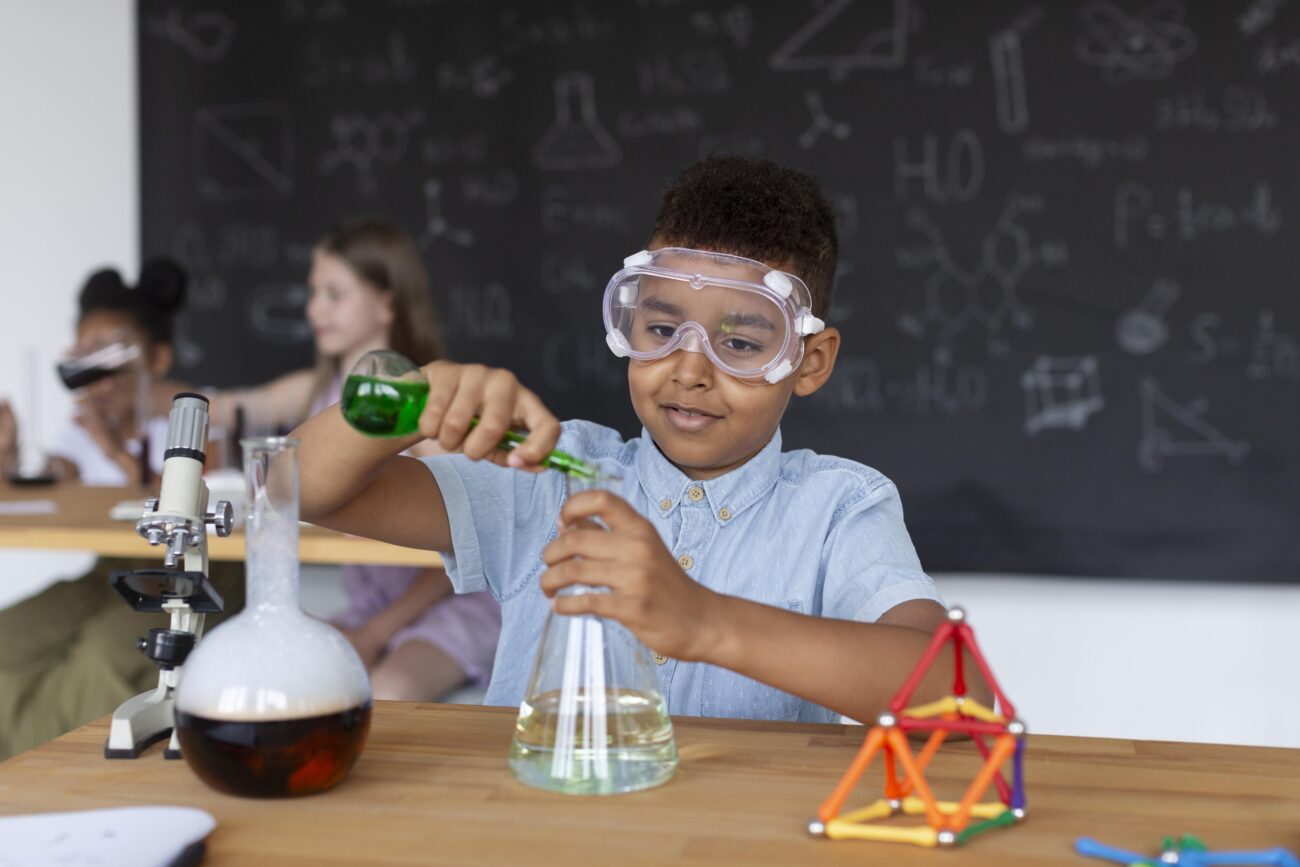
We put a lot of effort into making it seem like a school desk is the perfect place to start a science career. School districts invest millions in new curriculum materials, digital screens, and lab kits to make science look exciting. Teachers stay late planning experiments, setting up beakers, and writing instructions to show students that what happens in class is important for their future.
If we’re honest, there’s only so much that can be done inside a classroom. Even with the most passionate teachers, learning science at a desk often feels artificial. Students notice they’re in a controlled environment. They realize the chemistry experiment has a set outcome written in a manual and that the main goal is to memorize steps for a quiz. To make science a real career option, students need to experience it outside of school.
When students step outside the classroom and into the real world, everything about learning changes. It stops being about memorizing definitions and becomes an active, hands-on experience.
Imagine high school biology students leaving their desks to visit the coastal wetlands of Panama. In a school lab, they might label diagrams, memorize root system definitions, and watch conservation videos. This covers the curriculum, but it rarely changes how students feel or inspires real passion.
But when those students are standing in coastal mud, wearing boots, dealing with bugs and sunburn, and planting mangroves with local researchers, science becomes real. It’s no longer just another assignment, it’s something they live and remember. They see how tides affect their work and learn how local people depend on these wetlands. The tiredness, sunburn, and dirt under their nails create memories that a textbook never could.
These types of interactive educational trips do some. These hands-on trips also break down the fear that often surrounds top STEM careers. For most middle and high school students, places like MIT, Harvard, or advanced robotics labs seem out of reach, almost like they belong to someone else. They see tech pioneers on TV and think those opportunities aren’t for regular kids from ordinary backgrounds.Boston to walk those exact campuses and sit in the crowded stands at a live regional robotics competition, the illusion of impossibility vanishes. The students get to see that the researchers, programmers, and engineers working on high level projects are just ordinary people who simply learned a specific sequence of practical skills. They watch university students troubleshoot broken wiring under intense pressure, realising that failure and iteration are normal parts of the scientific method. The internal monologue of a twelve year old child changes from a feeling of total exclusion to a realisation of genuine belonging. Seeing these environments firsthand removes the mystery and gives a concrete, visual target for a future they can actually see themselves pursuing.
This change in perspective is even more powerful for kids from rural or underfunded areas where travel is rare. For eighth graders in a border town like Laredo, Texas, the world can seem small and choices limited. Going to Washington, D.C. to take part in fast-paced, interactive museum activities pushes them to think quickly and compete.
Instead of just looking at displays, these students tackle real-time technical challenges where they analyze data, form hypotheses, and defend their ideas. They learn they can think critically under pressure, solve tough problems, and communicate as well as anyone else. They come home with a new sense of confidence, knowing their potential isn’t limited by where they live and that they can compete with anyone.
Of course, these major breakthroughs do not happen overnight or by accident. A trip across the country or overseas requires a solid foundation of trust that must be built. Of course, these big changes don’t happen by chance or overnight. Travelling far from home takes months of building trust in the classroom first. When a Career and Technical Education teacher brings biomedical students from Denver to London, it’s not just a sightseeing trip. They’re working in a real research lab, doing live forensic DNA fingerprinting experiments. Or tunes out during a standard class period, suddenly looks up from a laboratory workstation with wide eyes, the academic investment makes sense. They realise that the exact procedures, pipetting techniques, and analytical methods they practised in their hometown high school are identical to those used by working scientists. The trip validates the classroom work, rewards their steadfastness, and proves that the teacher was giving them real, actionable tools for the real world.
It will always be infinitely easier for a school system to stay inside its comfort zone. Coordinating long distance student travel involves intensive logistical planning and extensive fundraising. It’s always much easier for schools to stick to what they know. Organizing trips far from home takes a lot of planning, fundraising, and responsibility for teachers. Teachers have to act as coordinators, fundraisers, and chaperones. It’s safer, cheaper, and less stressful to keep students in their seats and follow the usual lessons.We can teach the beauty of human discovery from the clean, safe environment of a dry-erase whiteboard, or we can give our students a direct encounter with reality that has the power to permanently change the trajectory of their lives. Moving science off the whiteboard and into the real world gives students a concrete future they can actually see themselves leading.
