
About
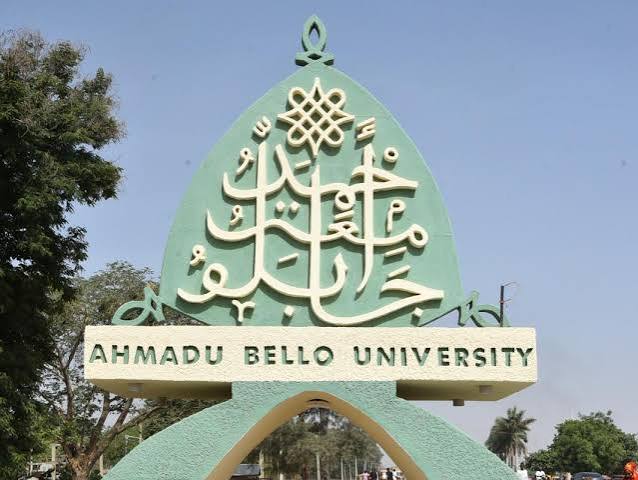
Ahmadu Bello University (ABU) is a federal government research university located in Zaria, Kaduna State. ABU was founded on October 4, 1962, as the University of Northern Nigeria.
The university operates three main campuses: Samaru and Kongo in Zaria, and School of Basic Studies in Funtua. The Samaru campus houses the administrative offices, sciences, social-sciences, arts and languages, education, environmental design interior, engineering, medical sciences agricultural sciences and research facilities. The Kongo campus hosts the Faculties of Law and Administration. The Faculty of Administration consists of Accounting, Business Administration, Local Government and Development Studies and Public Administration Departments. Additionally, the university is responsible for a variety of other institutions and programs at other locations.
The university is named after the Sardauna of Sokoto, Alhaji Sir Ahmadu Bello, the first premier of Northern Nigeria.
The university runs a wide variety of undergraduate and graduate programs (and offers associate degrees and vocational and remedial programs). The university has a large medical program with its own A.B.U. Teaching Hospital, one of the largest teaching hospitals in Nigeria and Africa.
Foundation and first years
As Nigeria approached independence on October 1, 1960, it had only a single university: the University of Ibadan, established in 1948. The important Ashby Commission report (submitted a month before independence) recommended adding new universities in each of Nigeria’s then-three regions, as well as the capital, Lagos. Even before the Commission report, however, the regional governments had begun planning universities. In May, 1960, the Northern Region had upgraded the School of Arabic Studies in Kano to become the Ahmadu Bello College for Arabic and Islamic Studies. (The college was named after the region’s dominant political leader, Alhaji Sir Ahmadu Bello.)
The Ashby Commission report recommendations gave a new impetus and direction, and it was ultimately decided to create a University of Northern Nigeria at Zaria (rather than Kano). The university would take over the facilities of the Nigerian College of Arts, Science and Technology at Samaru just outside Zaria, and would incorporate the Ahmadu Bello College in Kano, the Agricultural Research Institute IDN Poker at Samaru, the Institute of Administration at Zaria, and the Veterinary Research Institute at Vom on the Jos Plateau. The law establishing the new university was passed by the Northern Region legislature in 1961. It was decided to name the university after Ahmadu Bello, and the Kano college then took the name of Abdullahi Bayero, a past Emir of Kano.
At the opening on October 4, 1962, thanks in part to absorbing existing institutions, ABU claimed four faculties comprising 15 departments. However, students in all programs numbered only 426. The challenges faced were enormous. Over 60 years of British colonial rule, education in the Northern Region had lagged far behind that of the two southern regions. Few students from the North had qualifications for university entrance, and fewer still northerners had qualifications for teaching appointments. Of the original student body, only 147 were from the North. ABU’s first vice chancellor (principal administrator and leader) was British, as were most of the professorial appointments. Only two Nigerians — Dr. Iya Abubakar (Mathematics) and Adamu Baikie (Education) — were among the earliest round of faculty appointments. Facilities on the main Samaru campus were inadequate, and the administration and integration of the physically separated pre-existing institutions was difficult.
Nevertheless, under the vice chancellorship of Dr. Norman S. Alexander, academic and administrative staffing was developed, new departments and programs were created, major building plans were undertaken, and student enrollments grew rapidly. By the end of Alexander’s tenure (1965–66), almost 1,000 students were enrolled. The New Zealand-born Alexander, from 1966, became a kind of “freelance vice-chancellor”, offering his expertise to help in the setting up of other Commonwealth universities in the West Indies, Fiji and Africa.
Development through the middle 1970s
In 1966, Dr. Alexander was succeeded as ABU vice chancellor by Dr. Ishaya Shuaibu Audu,a pediatrician and associate professor at the University of Lagos. Audu had been born in Wusasa, near Zaria, in 1928. A native Hausa, he was ABU’s first Nigerian Vice Chancellor and a northerner.
ABU was seriously affected by the coups and the anti-Igbo riots of 1966. But, under Dr. Audu’s leadership, ABU was to grow and develop at an even faster pace. Growth in student enrollments had been held hostage to growth and development of A-level training at the secondary school level. So beginning in 1968–69 ABU broke free from the British three-year heritage and established the School of Basic Studies to provide advanced secondary pre-degree training on campus. Students who entered through the School of Basic Studies essentially embarked on a four-year program toward a bachelor’s degree.
Opposed initially by some, the school proved a great success and enrollments expanded even more rapidly. By its tenth year ABU total enrollments including non- and pre-degree programs were put at over 7,000 of which more than half were in degree programs. In its first ten years, the University of Ibadan produced 615 graduates. At ABU the corresponding figure after 10 years was 2,333 first degrees, along with several advanced degrees.
From the beginning, ABU was remarkable for the breadth of its ambition. In its institutions, but mainly on or close by the main campus by Samaru, ABU was creating a range of programs that only the very most comprehensive of U.S. state universities could have matched. Ranging far beyond the standard fields of the arts, languages, social sciences and sciences, it included engineering, medicine (the Zaria hospital was an ABU teaching hospital), pharmacy, architecture, and a wide variety of agricultural departments including veterinary medicine. What was called the Kongo campus just outside the old city in Zaria taught public administration and carried out a program of in-service training for local government throughout the north. The Faculty of Law was based at the Kongo campus. The Faculty of Education not only taught education courses but also managed the Advanced Teacher’s Colleges in the northern states. At the Kano campus (now called Abdullahi Bayero College) ABU taught courses in Hausa, Arabic and Islamic studies.
ABU was likewise remarkable among Nigeria’s universities for the breadth and national character of its student recruitment. ABU had been founded to be the University of Northern Nigeria. Yet, more than any other of Nigeria’s universities, ABU has served students from every state of the Nigerian federation.
Professorial staffing to serve the burgeoning student enrollments and course offerings was a potential limitation during this period. In the early 1970s relatively abundant funding made it possible to send some senior academic staff to overseas institutions to complete advanced degrees. A small but increasing number of Nigerians with Ph.D.s or other advanced degrees were returning from abroad (but ABU had to compete with the other Nigerian universities to recruit them). In the meantime, appointment of expatriate teaching staff was essential and it expanded greatly and diversified in nationalities. Vice chancellor Audu endeavored to balance the goals of Nigerianization (and “northernization”) of ABU’s professors with the commitment to maintaining all programs at an international level of academic quality.
By 1975, this balance was strained. The teaching faculty remained more than half expatriate overall; at senior levels still more so.The development of Nigerian staffing (and especially of northern-origin teaching staff) was perceived as too slow. In 1975, ABU turned toward a much heavier emphasis on internal staff development as it adopted the Graduate Assistantship program. Under this program, the best graduates from the departments’ undergraduate programs are recruited to join the department as staff-in-training and undertake advanced training as they gain on-the-job experience. Within a few years, a significant proportion of ABU senior staff were products of the internal training programs. From 1975, the proportion of expatriate teaching staff diminished rapidly.