
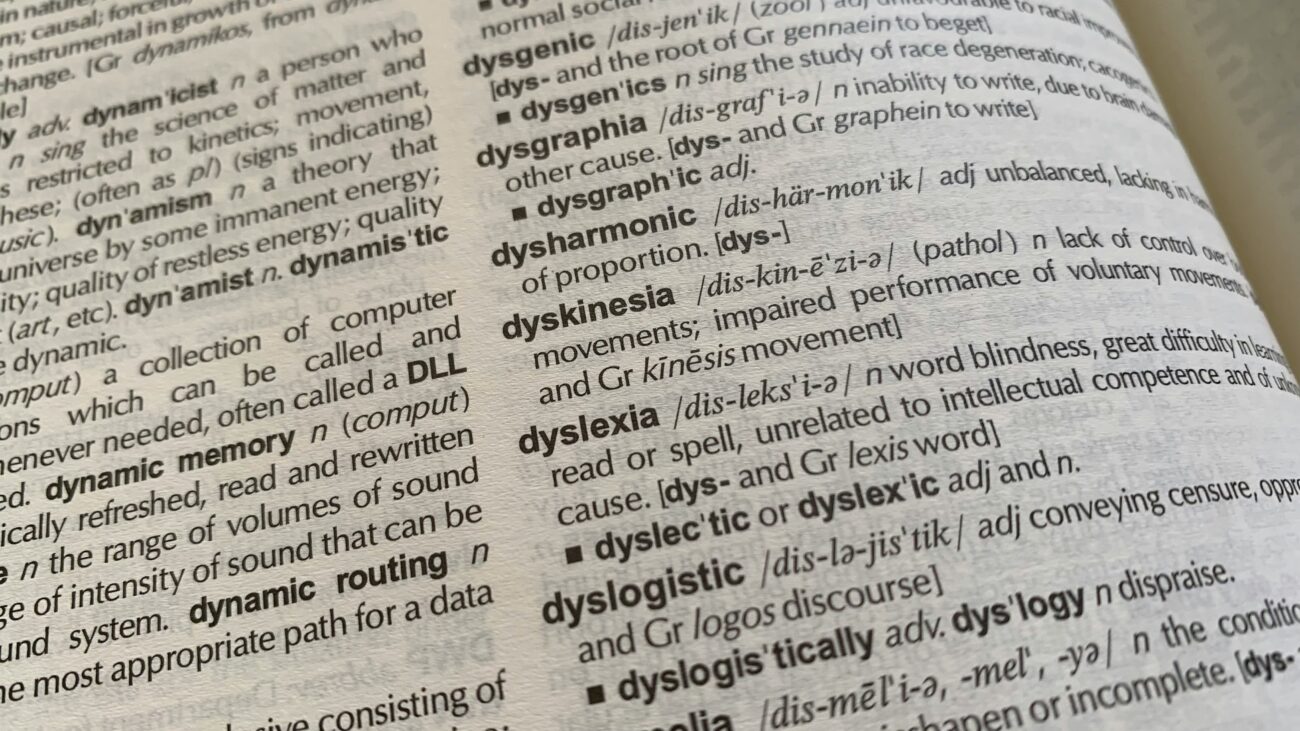
The IELTS Dictionary, also known as TID, is an IELTS preparation platform that brings together learning resources for listening, reading, speaking, and writing. It provides IELTS courses, vocabulary and grammar resources, practice materials, study guidance, and learning resources designed to help students work towards their target band score.
The teaching team includes IELTS 8.5 instructors and teachers with international teaching qualifications and academic backgrounds, with instructors and academic staff with qualifications and experience in areas such as TESOL, CELTA, debate coaching, and educational research. As part of modernizing educational tools and finding a balanced approach to education, these digital learning systems help streamline student preparation.
For a student serious about improving their IELTS score, the biggest attraction is that it connects vocabulary with the four IELTS skills and provides different stages of learning.
What Is The IELTS Dictionary?
The IELTS Dictionary is an online IELTS learning platform designed to support students preparing for the English-language examination.
It is a place where learners can practice the four core IELTS skills:
- IELTS Listening
- IELTS Reading
- IELTS Speaking
- IELTS Writing
It also provides vocabulary and grammar learning, self-study guidance, IELTS resources, and a learning pathway covering different ability levels.
The platform currently lists four main course levels:
- IELTS Basic
- Pre-Foundation
- Foundation
- Advanced
It also provides free resources, including an IELTS test bank, e-book and study-material resources, a 0–7.0 IELTS learning pathway, study experience content, and ability assessment resources.
This makes The IELTS Dictionary more than a place to look up individual English words. It is structured around the wider process of preparing for IELTS.
Importance of IELTS Vocabulary
Vocabulary is one of those areas that can quietly affect almost every part of your IELTS performance.
If you do not understand enough words, reading can become frustrating. A paragraph may contain several unfamiliar expressions, making it difficult to understand the writer’s meaning.
Listening can create a similar problem. You may recognize a word when you see it written down but fail to recognize it when a speaker says it quickly.
Vocabulary also affects speaking and writing because knowing a word is different from being able to use it naturally. This challenge often extends to academic discussions and educational policy, especially when debating modern teaching approaches such as those explored in ban it or teach it?.
The IELTS Dictionary therefore places a strong focus on vocabulary learning alongside the four IELTS skills.
Its selected vocabulary collection contains 2,442 words that appeared at least five times across 40 Cambridge Reading tests from Cambridge 7–18, and those words cover 93.3% of the words in that collection of tests and are prioritized according to frequency, rather than asking students to learn every word in the 7,192-word collection.
Each word in that selected vocabulary resource includes its Vietnamese meaning, pronunciation, an example, and an option to save the word for later review.
That approach can be useful for students who feel they have too many words to learn and do not know where to start.
The IELTS Dictionary and the Four IELTS Skills
One of the main features of the IELTS Dictionary is its focus on all four IELTS skills, with more than 100 practice items or topics for each of listening, reading, speaking, and writing.
IELTS Listening
The IELTS Dictionary provides listening practice designed to help students become more comfortable with spoken English.
It offers more than 100 real-conversation listening exercises. The goal is to help learners understand spoken English more naturally.
Listening practice is not simply about hearing English. You need to recognize words, follow connected speech, and understand information while the recording continues.
The IELTS Dictionary’s learning pathway also places attention on pronunciation and sound recognition. For learners moving from Band 3.5 to 4.5, its guidance includes work on connected speech, spelling, plural endings, and distinguishing sounds that can easily be confused.
Techniques such as listening in meaningful groups of words, dictation practice, and exposure to natural English content are encouraged.
For someone who regularly says, “I know the word, but I cannot hear it in the recording,” this type of practice can be particularly useful.
IELTS Reading
Reading requires more than knowing English words individually.
You need to understand sentences, recognize paraphrasing, and find relevant information without getting stuck on every unfamiliar word.
The IELTS Dictionary says its Reading section contains more than 100 selected reading exercises covering different topics. It presents these materials as a way to build vocabulary and reading ability.
Its learning pathway also recommends learning vocabulary through context rather than simply memorising isolated words.
For learners in the lower bands, graded reading materials and analyzing basic sentence structures are recommended. At the next stage, it recommends paying attention to collocations, sentence structure, and paraphrasing.
This is useful because IELTS Reading often requires you to recognize that the question and the passage may express the same idea using different words.
IELTS Speaking
Speaking can be one of the most stressful parts of IELTS.
You may know what you want to say, yet your mind can suddenly go blank when someone asks you a question.
The IELTS Dictionary provides more than 100 speaking topics, according to its official website. These are intended to help learners build confidence and improve their ability to respond to common speaking themes.
Its premium speaking service also includes speaking assessment features. The system can analyze areas such as pronunciation, intonation, speaking speed, fluency, and tone of voice. It also provides speaking mock interviews and predicted-topic practice.
Students can also create their own speaking topics for Parts 1–3 under the Speaking package.
The purpose is not simply to collect impressive words.
A strong vocabulary only becomes useful when you can bring it into a real sentence without sounding forced.
IELTS Writing
Writing is another area where vocabulary alone is not enough.
You need to communicate an idea clearly, organize your answer, and use language appropriately.
The IELTS Dictionary says its writing resources contain more than 100 practice topics ranging from basic to advanced levels. Its writing support helps learners develop grammar, clarity, and organized expression.
Its paid writing service includes unlimited writing correction based on the four IELTS assessment criteria. It also provides writing translation exercises and a Writing Builder that allows users to create their own writing questions, including Task 1 images.
Its writing feedback system was trained using more than 500 corrected IELTS writing papers from IELTS examiners.
The IELTS Dictionary’s Vocabulary Approach
One of the clearest features of the platform is its approach to vocabulary.
Rather than telling students to memorize enormous lists of words, the IELTS Dictionary’s learning pathway promotes learning words according to their usefulness and frequency.
Its guidance gives different vocabulary targets for different band ranges.
For learners moving from Band 2.0 to 3.5, it suggests approximately 500–1,000 word families.
For Band 3.5 to 4.5, it gives a range of around 1,000–2,000 word families.
For Band 4.5 to 6.0, the suggested range is around 2,000–3,500 word families.
For Band 6.0 to 7.0, it lists around 3,500–5,000 word families.
It also recommends different vocabulary sources at each stage, including Oxford 3000, Oxford 5000, Cambridge resources, and the Academic Word List.
Learning fewer words properly can be more useful than rushing through a huge vocabulary list without being able to use the words.
How to Use the IELTS Dictionary
If you are new to the platform, it can be difficult to know where to begin. Here’s a simple approach to make the process much easier.
- Know Your Current Level
Do not start by choosing the hardest vocabulary available.
The IELTS Dictionary provides different learning stages, including Basic, Pre-Foundation, Foundation, and Advanced. It also provides band-based learning guidance.
Start with material that matches your current ability.
If your English foundation is weak, building basic vocabulary and sentence structure first can give you a stronger base for later IELTS practice.
- Set a Target Band
Know what you are working towards.
For example, there is a big difference between preparing for a basic English requirement and working towards Band 7.
Your study materials should reflect that difference.
The IELTS Dictionary’s learning pathway is divided into stages such as Band 2.0–3.5, Band 3.5–4.5, and higher levels, giving learners a progression rather than treating every student as if they are starting from the same place.
- Build Vocabulary Gradually
Do not try to memorize hundreds of words in one sitting.
Choose a manageable number of words and learn:
- The meaning
- Pronunciation
- How the word behaves in a sentence
- Related words
- Common combinations
- How the word can be used in IELTS tasks
The IELTS Dictionary’s vocabulary resource includes meanings, pronunciation, examples, and saving functions, while its wider learning guidance recommends learning collocations and using vocabulary in context.
- Use the Words
This is where many students make a mistake.
They learn a word, feel happy because they can remember its meaning, and then move on. A few days later, the word is gone.
The IELTS Dictionary specifically advises learners that vocabulary needs to be used. Its learning guidance places emphasis on active use, collocations, context, personal relevance, and quality rather than simply collecting large numbers of words.
After learning a new word, create your own sentence.
Say it aloud.
Use it in a short paragraph.
Try to include it in a speaking response.
The more actively you use vocabulary, the more familiar it becomes.
- Practice All Four Skills
Do not spend your entire preparation time learning vocabulary.
Use the vocabulary while practicing listening, reading, speaking, and writing, as the platform is built around all four skills, with separate practice resources for each.
A simple study session might involve vocabulary practice followed by reading, then a short speaking exercise and a few sentences of writing.
This creates a connection between knowing a word and actually using it.
- Keep a Personal Vocabulary Notebook
The IELTS Dictionary provides the ability to save vocabulary into a personal notebook through its paid vocabulary features.
You can use this to keep track of words that repeatedly cause problems.
Do not fill your notebook with every unfamiliar word you see.
Focus on words that are useful, frequently encountered, or relevant to the IELTS topics you are studying.
- Review Old Words
Learning a word once is rarely enough.
The IELTS Dictionary’s learning pathway recommends spaced review and gives review cycles such as Day 1, Day 3, Day 7, Day 21, and Day 60 as part of its vocabulary guidance.
The basic idea is straightforward: return to vocabulary after intervals instead of studying it once and never seeing it again.
This is especially useful if you have ever experienced the frustration of recognizing a word but being unable to remember its meaning.
Error Analysis: Learn From Your Mistakes
One of the more useful ideas in the IELTS Dictionary’s learning pathway is error analysis.
Instead of simply marking an answer wrong and moving on, ask why the mistake happened.
It divides errors into three broad groups:
- Global errors affect the meaning of the whole sentence and make your message difficult to understand.
- Local errors are smaller grammar or language mistakes where the meaning can still usually be understood.
- Stylistic errors happen when something is grammatically correct but does not sound natural or appropriate for the context.
This approach can change the way you study. Using effective ways to learn from your practice sessions will help you analyze the root causes of these mistakes.
Instead of saying, “I got five questions wrong,” you can ask:
- What caused the mistakes?
- Did I misunderstand the vocabulary?
- Did I miss a synonym?
- Did I misread the question?
- Did I make a grammar mistake?
- Did I spell the answer incorrectly?
Once you know the reason, you can work on the actual problem.
The IELTS Dictionary’s Learning Pathway
The band-based pathway is designed to move students through different stages of English development.
At Band 2.0–3.5, the focus includes building basic language recognition, vocabulary, sentence structure, and fundamental grammar.
At Band 3.5–4.5, the focus shifts towards stronger sentence construction, academic language, connected speech, fluency, pronunciation, and vocabulary development.
The pathway also contains guidance for higher stages and connects vocabulary development with IELTS performance.
This can be useful for students who feel lost because they are jumping directly into full IELTS tests without fixing weaknesses in their English foundation.
What Does The IELTS Dictionary Offer Beyond Vocabulary?
The name might sound like a simple dictionary, but its current website presents a much wider learning system.
It offers courses, four-skill practice, vocabulary and grammar resources, study guidance, test materials, and additional learning resources.
Its premium also includes speaking and writing feedback, vocabulary study tools, listening quizzes, YouTube learning materials, writing translation exercises, and speaking practice.
The six-month package also states that subscribers receive access to a collection of more than 300 IELTS books and resources.
The platform therefore tries to bring several parts of IELTS preparation into one place.
Is The IELTS Dictionary Suitable for Self-Study?
The platform specifically provides a self-study learning pathway and describes personalized learning guidance as part of its service.
For someone studying independently, this can provide some structure.
Instead of waking up each day wondering what to study, you can work through a level, practice a skill, record mistakes, and return to vocabulary that needs more attention.
Still, self-study requires consistency. No dictionary, app, or online course can make progress happen without regular practice.
If you only open the platform occasionally, you are unlikely to get the full benefit from the learning resources.
The Role of Technology in the IELTS Dictionary
It uses technology for some of its newer learning features.
Its speaking service uses an AI-based system to analyze areas such as pronunciation, intonation, speed, fluency, and tone. Its writing service also uses an AI-based system for writing feedback.
This can provide quick feedback during independent practice.
However, students should still treat automated feedback as a learning aid rather than assuming that every automated assessment is identical to an official IELTS result.
The IELTS Dictionary itself describes these services as part of its learning platform rather than as an official IELTS examination.
A Simple Daily IELTS Dictionary Study Routine
You do not need to spend your entire day studying to create a useful routine.
A simple session could begin with vocabulary.
Learn a small group of words and study their meanings, pronunciation, and examples.
Then spend some time on reading or listening.
After that, use several of the new words in speaking.
Finish by writing a few sentences or a short paragraph using the same vocabulary.
The connection is: do not treat vocabulary, speaking, reading, and writing as completely separate subjects. Use them together.
For example, if you learn vocabulary about education, read an education-related passage, listen to a discussion about education, answer a speaking question about education, and write a short response about the same topic.
That gives the vocabulary repeated exposure in different situations.
What Makes a Good IELTS Vocabulary Study Session?
A useful session should leave you able to do something with the words you learned.
Instead of asking yourself, “How many words did I memorize today?”
Ask:
- Can I recognize these words when I hear them?
- Can I understand them in a reading passage?
- Can I use them correctly in a sentence?
- Can I use them naturally while speaking?
- Can I use them appropriately in writing?
If the answer is yes, you are moving beyond memorization and towards practical language use.
A Few Things IELTS Students Should Avoid
- Do not learn difficult words simply because they look impressive.
- Do not force advanced vocabulary into every sentence.
- Do not memorize long lists without reviewing them.
- Do not ignore basic grammar while chasing vocabulary.
- Do not spend all your study time on one IELTS skill.
- Do not treat a practice score as a guarantee of your official IELTS result.
- And do not copy model answers word for word. Learn from them, but develop your own ability to communicate.
Safety and Accuracy Considerations
The IELTS Dictionary describes itself as an IELTS preparation platform and provides learning resources, courses, and assessment tools. Its terms of service state that users are responsible for protecting their account credentials and that use of the platform is subject to its published terms and policies.
It also publishes separate information about privacy, payment, refunds, service delivery, and other user policies.
Students should check the current terms and pricing before paying for a package because course features, prices, and policies can change.
It is also worth checking the exact IELTS requirement set by your university, employer, or immigration authority. A preparation platform can help you study, but the required band score depends on the organization asking for your IELTS result.
Final Thoughts on the IELTS Dictionary
The IELTS Dictionary is a broader IELTS preparation platform rather than simply an online dictionary.
Its resources cover listening, reading, speaking, and writing, alongside vocabulary, grammar, study guidance, and IELTS learning materials. It also provides different learning levels and a band-based pathway, giving students a way to work from foundational English towards higher IELTS targets.
Its vocabulary approach is particularly useful for students who feel overwhelmed by the sheer number of English words they could study. Its selected vocabulary package focuses on words appearing repeatedly in Cambridge Reading tests and allows learners to study meanings, pronunciation, and examples while saving words for later review.
The most useful way to approach the platform is not to treat it as a place where you simply collect difficult words.
Use it as part of a complete study routine.
Learn vocabulary.
- Use it.
- Listen to it.
- Read it.
- Speak with it.
- Write with it.
- Review your mistakes.
- Then repeat the process.
That gradual approach can make IELTS preparation feel much less confusing because you are not trying to improve everything at once. You are building one skill on top of another.
Key Takeaways
The IELTS Dictionary provides:
- IELTS Listening, Reading, Speaking, and Writing resources.
- IELTS vocabulary and grammar learning.
- Different learning levels, including Basic, Pre-Foundation, Foundation, and Advanced.
- A band-based learning pathway.
- Vocabulary resources based on frequently occurring words.
- Vocabulary examples, meanings, and pronunciation.
- Personal vocabulary-saving tools.
- Speaking practice and automated speaking feedback.
- Writing practice and automated writing feedback.
- Listening quizzes and additional learning materials.
- Self-study guidance.
- Additional IELTS books and resources through selected paid packages.
Do not measure your progress only by how many words you have memorized. Measure it by how well you can understand and use those words.
That is what turns vocabulary from a list of definitions into language you can actually use during IELTS.
